On The Roots' "Undun"
Reflecting on a great piece of music after 10 years.

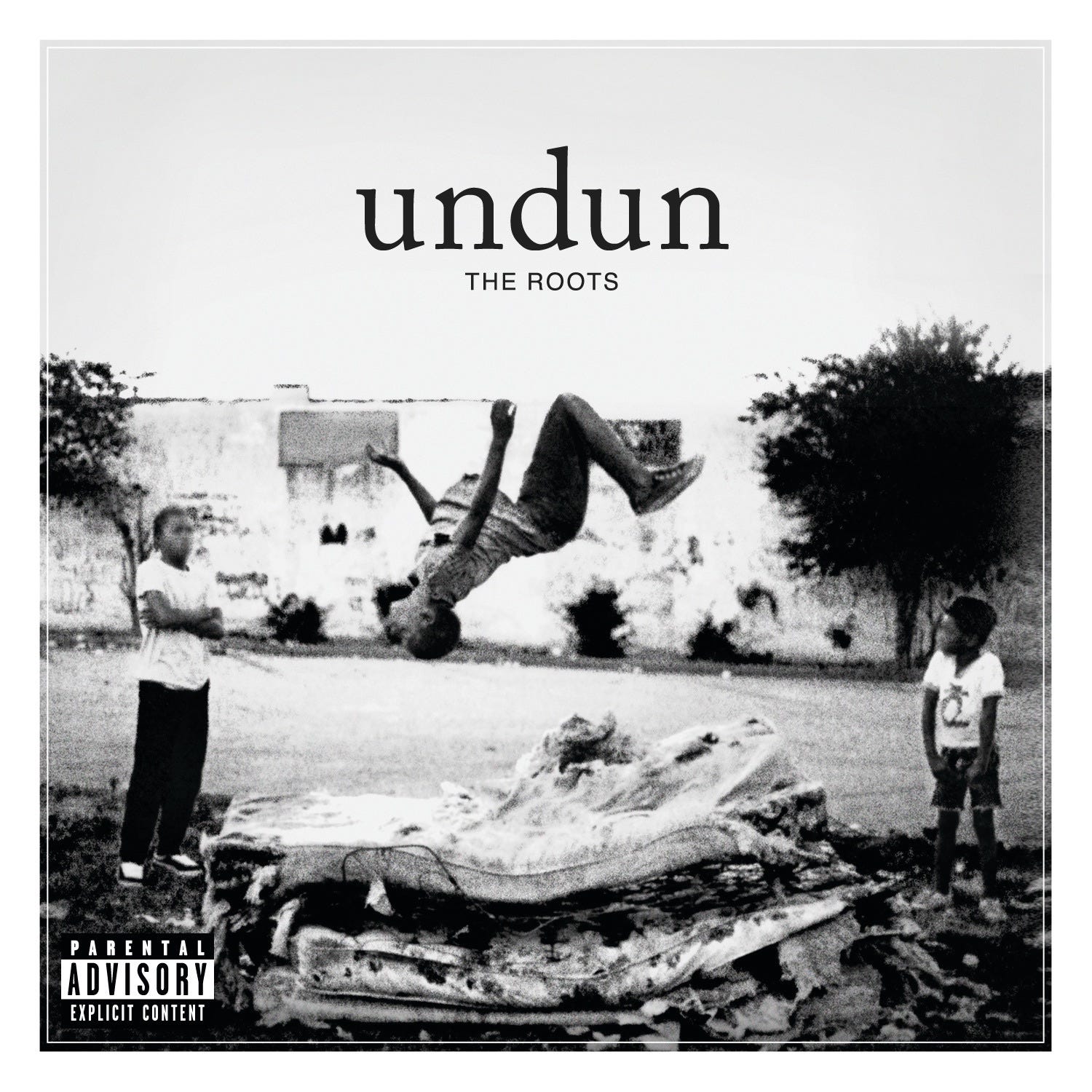
Earlier this month, The Roots’ 2011 album Undun turned 10 years old. It’s my favourite album. This is not a review. If anything is to come from this, I hope anyone interested listens to the album and experiences hearing this “Rap Tragedy.” If I wanted to go full reviewer-mode, I’d call it something like “Urban Shakespeare.” Forget that though, this is not meant to rank or classify this album at all.1 My goal is to propagate art that I like.
The Beginning of the End
Undun conveys a loose narrative about a fictional young man, “Redford Stevens,” living in urban poverty and enduring a tragic cycle of hustling and drug dealing. The album is told in reverse chronological order, beginning with Redford’s flatlined heartbeat in the track “Dun.” The remaining songs cover Redford’s last moments conscious and his trajectory in a criminal career. The record ends with a series of four instrumentals which fade out to an uncertain conclusion.
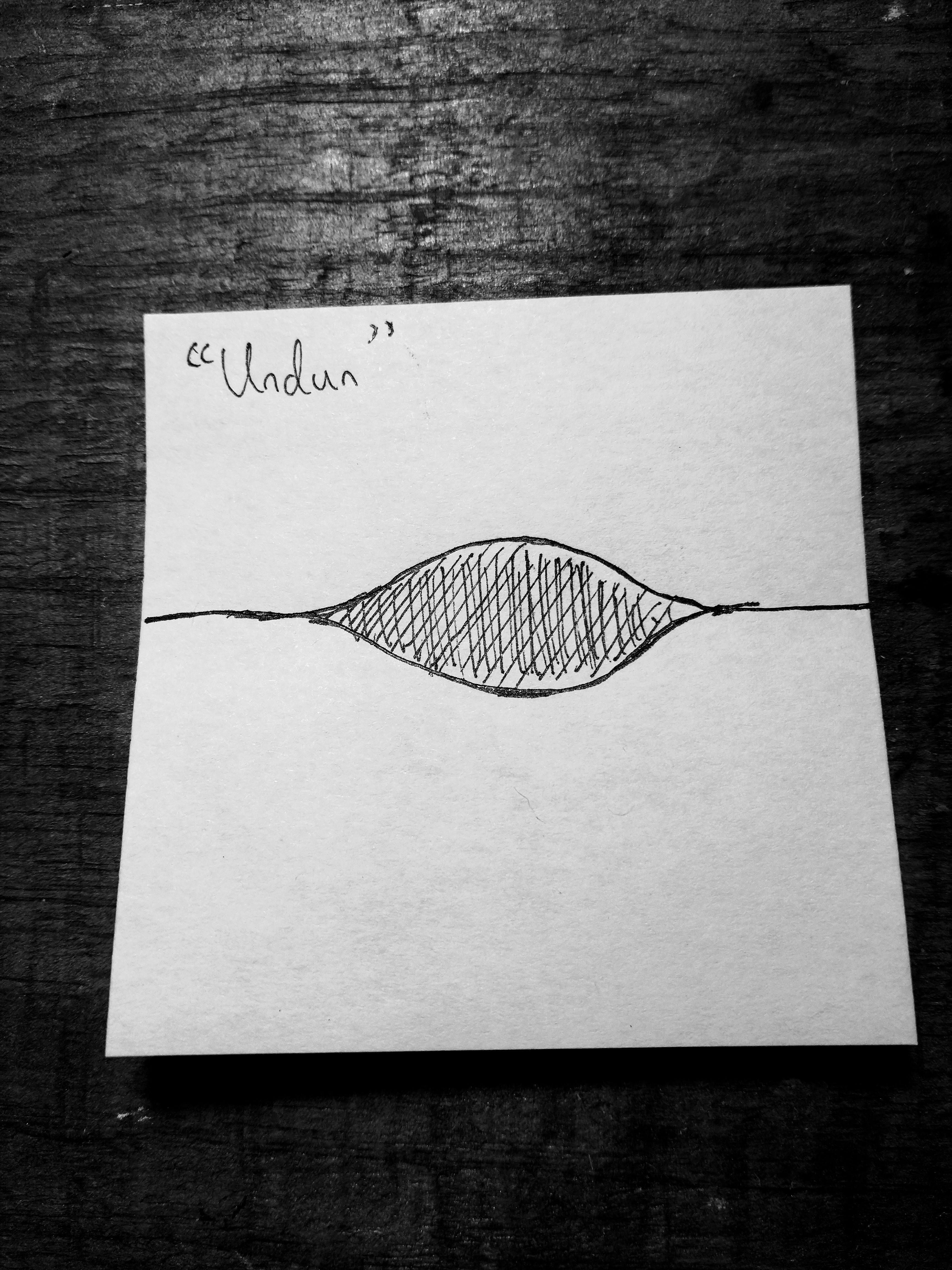
The album has a symmetrical shape: two converging zippers. The narrative presents a compelling conclusion and opens it back up for examination, and closes it again. It’s worth listening to backwards, starting with the song “Tip the Scale” and ending with “Dun.”
I won’t dive in and explain each element of this record, because I’m not in university anymore. Mostly, because music is music and interpretation is interpretation. What I say is totally secondary to what the album says. I will, however, outline and discuss some of my own stand out moments from the album and offer my thoughts. I believe The Roots produced a masterful record in Undun, showcasing their talents as a band and pushing the artform to create a dramatic story that unfolds like a short play.
The Cast
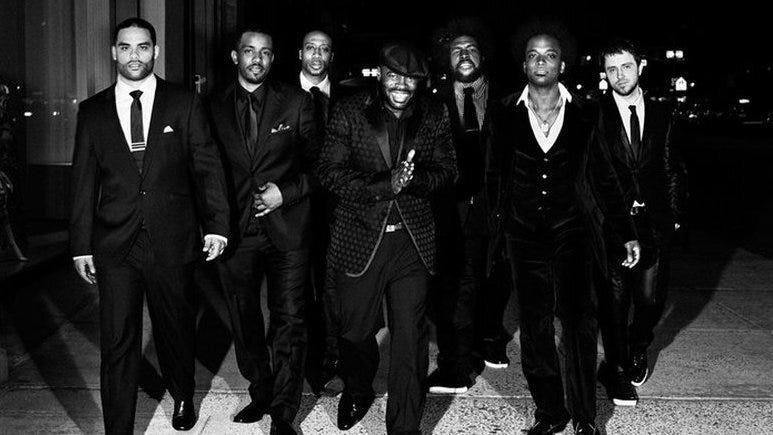
Undun features prominent vocal performances from Black Thought, Son Little, Big K.R.I.T., Phonte, Dice Raw, Greg Porn, Truck North, and Bilal. Redford is represented by everyone on the album; each rapper uses the first person perspective during their verses. Redford has a universal voice. Even though he is a specific character created for this album, he encompasses the traits of a man who gets swept up in a system which has swallowed other young men before. As The Roots’ drummer Questlove says, “[Redford is] the prototypical urban kid — young, gifted, black, and unraveling before our eyes."2 Each rapper stands out with their personal style, but they work towards a common goal. In a play, you’re ideally more focused on the characters than the actors.
How did we get here?
The 3rd track “Make My” is the climax of the entire album. Just as we are getting started, we are presented with a conclusion. In this song, Redford is contemplating making his “departure from the world,” and presents some of the more lucid and complete thoughts about his situation. He sounds weathered and resolved to his fate.
Stand-outs from this song for me are Big K.R.I.T.’s verse, those congas in the background, and the instrumental break starting at 2:36. The hi-hat that kicks this break off is one of the greatest hi-hat uses in hip-hop (along with the hi-hat in Kendrick Lamar’s “Alright.”) To me, it represents Redford letting go and slipping off into the big sleep. This break leads into the rest of the album. It is the falling action of a typical narrative. In Undun, it represents an emotional knot for the remaining tracks to untangle, and queues up an exploration of what lead Redford to this mindset.
The Peaks
As melancholy as this all sounds, Undun has a fair amount of fire in it. “One Time,” “The Otherside,” and “Stomp” are full of frustration, determination, strength, and confidence. Black Thought’s forceful and precise delivery carries these emotions through the central part of Redford’s arc, in contrast to Big K.R.I.T.’s sensitive and reflective delivery on “Make My.” It’s worth branching off to mention Big K.R.I.T.’s previous experience with this level of emotional depth in his song “The Vent."
Rapper Greg Porn’s role on Undun is to relay some of the moments from Redford’s “peak” during his life of crime. Even though we already heard Redford’s decline and death, Greg Porn’s verse on “Kool On” makes the lifestyle sound glamorous and cinematic. “The Otherside” contains a minimalist beat composed mostly of keyboard and drums. The drums sound punchy and expansive, like Redford is up on a concert hall stage asserting his position as the “toast of the town.”
Sonic Epilogue
The instrumentals at the end of the album contain their own mini arc. The first of 4 movements is actually the song “Redford (for Yia-Yia and Pappou)” from Sufjan Stevens’ 2003 album Michigan. Undun’s character Redford Stevens is named after this song, taking Sufjan’s surname.
The next three movements are original compositions by The Roots. They are a mini version of the album, taking the listener through highs and lows with raw instrumentation. The 4th and final movement, “Finality,” ends on a hopeful sounding chord, which is then immediately cut off by a sustained nasty, dark, dissonant chord that dampens and envelops the hopeful sounding movement.
In high school band, we played Mark Camphouse’s composition “A Movement for Rosa,” a concert band piece honoring civil rights activist Rosa Parks. This piece ended with a similar hopeful section, followed by an uncertain and tenuous chord which casts doubt on a neat and tidy ending to the fight for civil rights in America. The implication being that the fight is not over, and at the end of Undun, I realize Redford is one of many just like him.
Clocking in at a 38:49 runtime, Undun is a flash in the pan. The narrative comes full circle and suggests a broader meaning beyond its plot, like a timeless film. After 10 years of listening, I still don’t exactly know what to make of it, and that’s why I consider it great. If you listen to it, let me know what you think.
Thank you for reading,
-Sam
It’s a 10/10.
https://www.huffpost.com/entry/undun-the-roots-album_b_1105719
Amazing Sam, I love how you write. Makes me want to listen to the album.